Showing posts with label Children. Show all posts

Wednesday, October 12, 2016

THEY DESPERATELY WANTED HER

Adoption of Aboriginal Children

There have been enough of these cases in the past, that long ago some legal parameters were established that would service aboriginal children's care responsibly while respecting their heritage. On the B.C. government's own website the fundamental understandings are unmistakably stated.

When Aboriginal children and teens are in need of care, the B.C. government's own standard states, Research and experience indicates that children who grow up connected to their culture do better. Aboriginal children and teens feel more at home when they live with a family that helps them stay in touch with their culture and community. (BC government's own page states this.)

The government urges competent compassionate caregivers to consider opening their homes to children in need and furthermore appeals to these people to consider adopting the children. One might ask whether there are any special provisos with respect to adoption of aboriginal children and youth? Yes there are and these too are unambiguously stated in the government's own guidelines.

With respect to this particular case of the little Métis girl named S.S. the government page makes provision for an Aboriginal Custom Adoption.  Here is the government's own statement. "Aboriginal children in care need homes with Aboriginal families whenever possible – to help them stay connected with their extended family and community." The agreed upon system or policy established between the B.C. government and the Métis or aboriginal communities is as follows. "The custom adoption process makes it possible for Aboriginal families, organizations and communities to use a culturally appropriate way of planning for Aboriginal children; respects the customs and traditions of the First Nations and/or Aboriginal community of the child; ensures Aboriginal children maintain their cultural, linguistic and spiritual identity. It’s recommend that adoptive parents get a lawyer to help them in their application to have a custom adoption recognized by the Supreme Court."

Foster mom (Métis) and foster dad enjoyed S.S. in their home and family life for three years, unnecessarily long if MCFD intended ever to move her, and during that time, foster parents had in fact conducted an Aboriginal Custom Adoption with approval of the birth parents. They had also applied for formal recognition of this adoption, but MCFD rejected this by filing orders to remove her and move her to Ontario.


BY ALL MEANS look up the little girl's Facebook page ‘Bring Home Baby S’, and the two websites that tell her story, bringsshome.ca or bringsshome.com

Tuesday, August 30, 2016

FLASHBACK - ZABETH & PAUL BAYNE

This is a flashback to well over a decade ago when I officiated the wedding ceremony for Zabeth and Paul. Today they have four vibrant, growing, intelligent and lovely children. They could never have imagined as they knelt before me (their choice), that within a few years they would experience yet endure the gravest assault upon their family, their hearts and their reputations. In 2007, accused (but unproven) of hurting their youngest of three children then, all three children were removed from them. For four years they maintained their innocence and fought passionately through hearings and court cases. Then as a crowning insult, their newborn fourth child was removed shortly after birth in 2011. With the help of the late Doug Christie (barrister extraordinaire) and Ray Ferris (former MCFD supervisor turned critic) and through their own faith and determination and the moral support of hundreds of advocates, they received their children back in 2011, and in the five years since then, their thriving family provides the continuing evidence of a wrong diagnosis, incorrect assumptions of guilt, the risk of unfettered power among blasé bureaucrats, social workers and litigators; as well as the evidence of the diligent, honest, upright and loving parents and people that Paul and Zabeth are. They are a continuing inspiration to many troubled people. I will never forget them, Zabeth in particular with whom I maintained an almost daily contact through the years of their ordeal. Thank you God, for setting them free.

Sunday, August 23, 2015

WALKER'S SCATHING INDICTMENT - Part 6 of 6 - Continued … More findings

This is my synopsized prose version of Justice Walker's 140-page judgement presented in several segments that reveal the substance of Walker's overview of evidence that demanded his verdict against the Ministry of Children's Child Protection. No stated opinion or fact appears here that does not also appear in the Justice Walker's ruling (legal document). It is public information
The Ministry failed to carry out its obligations to protect the children from harm and to act in their best interests, yet the fault cannot be attributed to a single Ministry employee.  Rather, many opportunities arose for the Director to conduct a proper assessment and investigation of the reports of sexual abuse. She frequently received evidence and other information and different employees were at fault at different stages for various reasons. What is compellingly obvious is that the Director and her agents formed their opinions prematurely, before the children were interviewed, and so concluded that J.P. fabricated her report information and there really was not merit to her allegations of sexual abuse by the children's father.
Most startling is the fact that until the 64th day of the First Trial, the Director maintained this view that the allegations were groundless and that J.P. was unfit to parent. Then the Director changed her mind. Nevertheless, the Director supported B.G.’s claim for custody of the children and to the detriment of the children, unreasonably preserved that plan until March 29, 2012.
Justice Walker did determine that B.G. sexually abused P.G., the youngest child, at the time that the Director allowed him unsupervised access. The Director has exhibited lack of regard for directions from this court as well as for her obligation to present candid, full disclosure to the Court during the Apprehension Proceeding. The Province is responsible in law to pay for any damages suffered as a result, and is liable for special costs of the first trial.

When finally the children were returned to their mother, the Director thwarted the plaintiffs’ request for funds from another branch of the provincial government that provides compensation to victims of criminal acts. The plaintiffs proved this.

Wednesday, July 22, 2015

JUDGE WALKER'S DECISION AGAINST THE MINISTRY OF CHILDREN MAKES THE NEWS.


News sources jumped on this story that Judge Paul Walker ruled that the Ministry failed to protect children from sexual abuse by their father, despite the report and testimony of their mother whom they chose not to believe. Judge Walker ruled in her favour. She then sued the Ministry and this past week, July 14, 2015 Judge Walker again ruled in her favour and has shamed Ministry personnel in his scathing denunciation of their work. Here are sources you can review.


Justice Paul Walker labelled the failure as 'egregious, negligent and a breach of duty ... Tuesday,
Justice Paul Walker issued a biting decision against MCFD in an horrendous case that the Sun revealed two years ago.
NDP demands answers from the government about its Child Ministry's failure to protect children from an abusive father, refusing to believe their mother's allegation against him.
Justice Paul Walker delivered a scathing ruling in favour of a mother who sued the province for refusing to investigate her kids' reports ...
B.C. Supreme Court Justice Paul Walker ruled the father sexually abused his children and he says the province acted recklessly.
Supreme Court Justice Paul Walker rules in favour of a mother who sued the province for refusing to investigate her children's reports.
Justice Walker's scathing ruling in favour of a mother who sued the province after the Children's Ministry failed to believe her allegations that the father was abusing the children.
5 days ago - B.C. Supreme Court Justice Paul Walker has delivered a scathing ruling in favour of a mother who sued the province for refusing to investigate her kids' reports ...

Justice Paul Walker said in a written decision released Tuesday that the ministry showed “reckless disregard” when it falsely accused a mother of being mentally.

Saturday, April 4, 2015

SHOULD YOU AGREE TO MEDIATION?

Your child may have been removed from you by the Ministry of Children and Family Development (MCFD) in British Columbia. You may sincerely believe that the removal was unjustified. You may feel that you have valid reasons to contest the actions of the Ministry. You are entitled to your day in court so to speak. It is not unusual for MCFD to seek to establish a Mediation agreement with you that disposes with court proceedings.

It is important that you think carefully before agreeing to this.

You can inform the Ministry of the following:

1. It is my right to have legal representation and advice in all dealings with the director.
2.I do no wish to commit to any sort of hearing until I have a chance to seek counsel.
3. I have been advised that mediation places a gag order on me. This means I will be unable to consult with some of my advisers and places me at great disadvantage.
4.The mediation cannot be arranged without my consent and I have been advised that attendance is not compulsory.
5. I have been advised that once a person enters mediation it can postpone protection hearings and this has sometimes caused very long delays.
6.When the director filed a complaint with me under the CF&CSA he clearly placed himself in an adversarial position and this is again apparent in the presentation report. He has great power over me under the Act and this would make any negotiations in good faith to be difficult.

I am informing you that I will not attend or participate in the mediation program.

Thursday, January 15, 2015

IS EMERGENCY REMOVAL OF CHILDREN STANDARD PRACTICE?

reunion party photo
Over a six-year period, this Blog focused upon two cases in which so-called 'emergency removal' of children occurred. That is what propelled me to speak to the grievance, which I became aware was far more frequent than I wanted to believe or that is known by the public. These two consisted of first, a family of four children in which the surprise removal, or removal without notification occurred several times, and second, the case of a girl taken from her school. In the first case, the removal and custody battle lasted four years. In the latter case the girl spent three years in foster care, originating from an incident when she, an autistic child, wandered from her back yard and was missing for three hours.

from www.lukesarmy.com
In the first case, the initial concern was that the infant had been physically abused, shaken. Was seizure without notification necessary in either of these cases? Has it become standard practice? These children were eventually returned to parents. Yet here is a gripping observation. In both the instances, the children were found not to have been maltreated, neglected, abused. That is merely symptomatic of a system that uses emergency removal as the tool with which to deal with appropriate concerns that must be investigated.

Saturday, January 10, 2015

THE TERROR OF A CHILD REMOVED

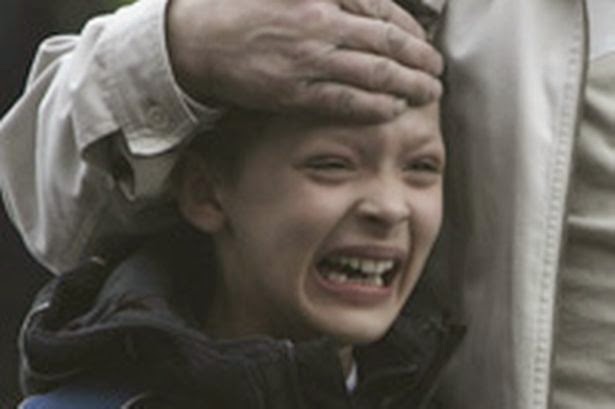
Often for various reasons, removals of children occur at night. That is absolutely terrifying to families and particularly to the children. In such cases parents do not have time to prepare their own children for the intervention and for the affects of separation from family. Obviously, I express this concern with a view to children who are not so badly neglected or abused that they feel they are being delivered. The personnel who conduct such removals as well as those who supervise the placement, are usually strangers to the children. A modest number of placements are made with relatives. It should not be minimized how alien such foster surroundings are perceived by children when all that is familiar is removed from them. They often have no idea why this happening to them. They may live in shock and panic and they may cry and isolate themselves unless they are infants and toddlers who respond to a hug and human warmth.

Friday, September 26, 2014

RESOLVING SYSTEMIC AND NON-SYSTEMIC PROBLEMS IN CHILD PROTECTION SERVICES, Part 11

By Ray Ferris (This piece is one of a series Ray has written here.)

USE OF TECHNOLOGY

Technology has its uses, but it also has its limitations. Good child protection depends on high qualities in the staff. Protection social workers need intelligence, integrity, compassion and courage. Without these qualities they cannot achieve the difficult skills needed by protection workers. If these qualities are lacking in staff, no amount of technology will help them. Just as this paper is being written using a sophisticated computer, the technology is only as good as the knowledge and writing ability of the user. Fixing problems by using technology often becomes another piece of wishful thinking and a vain search for the quick fix. People at every level of government can be beguiled by this hope. This can be just another attempt to fix non-systemic problems by systemic means.


Ferris retired after a career that included significant years with the MCFD. He has written a book entitled 'The Art of Child Protection.' This is the first in a series of pieces Ray will write here. You can order Mr. Ferris' book entitled 'the Art of Child Protection' by contacting the author directly at rtferris@telus.net.

Thursday, September 25, 2014

RESOLVING SYSTEMIC AND NON-SYSTEMIC PROBLEMS IN CHILD PROTECTION SERVICES, Part 10

By Ray Ferris (This piece is one of a series Ray has written here.)

ETHICS

Registered social workers have a code of ethics, which was drawn up by the BC Association of Social Workers. This code is fairly general and open to interpretation, but it does provide some sort of guidelines. When the social workers act was first passed and registration started, a good number of registered social workers were employed in child protection and related work. One children’s aid society urged all eligible employees to become registered. The registrar recently told me that they do not need to devise practice standards for protection workers because no members do that work any more. The director of the BCASW told me the same thing.

Wednesday, September 24, 2014

RESOLVING SYSTEMIC AND NON-SYSTEMIC PROBLEMS IN CHILD PROTECTION SERVICES, Part 9

By Ray Ferris (This piece is one of a series Ray will write here.)

ACCESS
The ministry seems to have no clear concept about what access is appropriate and what is not. The Ontario Association of Children’s Aid Societies does have guidelines and these are vastly different from what is practised in British Columbia. There seems to be no differentiation from case to case as to when close supervision of access is needed and when unsupervised access would seem more appropriate. The rationale appears to be that any protection action means that there is risk to a child and therefore there would be dire risk if unsupervised access were allowed. This is not rational. If the director is seeking a continuing care order, then this is a reasonable assumption and it might well be argued that access should not be allowed at all to parents who are so hopelessly unfit as to merit permanent loss of their children.

However, shall we say that due notice has been served on the parents that a temporary order only is sought and the plan on the presentation report was to return the children, then access should be supportive of such a plan. Every person who has had children in care, even for fairly short periods reports the same sort of thing. Any visits are tightly supervised and every word and gesture is tightly monitored, as if the parent would suddenly attack the child. This is so irrational that it strikes people as paranoid. When parents have no history of child abuse, but perhaps it is a case of borderline neglect, there is no reason to waste public money on such over-caution.

The Ontario guidelines also advise social workers to arrange all access visits to be in the family home whether supervised or not. This is to keep the children in touch with familiar things and to lessen their anxiety. I have had hundreds of foster children under the care of my staff and me. We seldom found it necessary to supervise visiting. When parents were able to pick up their children at the foster home and take them out for the day, it gave us good opportunities to evaluate the progress of the parent. If parents were consistent and reliable, it became positive evidence. I would introduce the parent to the foster parent first and our foster parents were often good mentors for the natural parent. If a supervised visit became necessary, I preferred to do it myself, so that I could evaluate the situation first hand.

The systemic change would be to draw up clear guidelines on visiting and to make it part of core training for protection workers. Old staff should be retrained on this matter. Such a device would save a great deal of money.

Ferris retired after a career that included significant years with the MCFD. He has written a book entitled 'The Art of Child Protection.' This is the first in a series of pieces Ray will write here. You can order Mr. Ferris' book entitled 'the Art of Child Protection' by contacting the author directly at rtferris@telus.net.


Tuesday, September 16, 2014

RESOLVING SYSTEMIC AND NON SYSTEMIC PROBLEMS IN CHILD SERVICES, Part 3

SPECIFIC CASES
by Ray Ferris, (This piece is one of a series Ray will write here. )

            I think perhaps that the best way to illustrate some of the problems in the protection services is to look at some specific cases in which the practice inside and outside the courts has wandered far away from what was intended by the members of the legislative assembly when they enacted the Child, Family and Community Services Act or CF&CSA.

            Our current system is based on the clauses of the CF&CSA. This act, for all its flaws, does have some good principles. Some are set out as guidelines and others as statutory requirements. We are reminded that the parents are the ones who bear primary responsibility and if they can make their children safe at home, then every help must be given to do so. Kinship contact must be maintained and, when care becomes necessary, that priority must be given to placement with relatives.

Sunday, September 14, 2014

RESOLVING SYSTEMIC AND NON-SYSTEMIC PROBLEMS IN CHILD PROTECTION SERVICES, Part 2

How To Define the Problems
By Ray Ferris (This piece is one of a series Ray will write here. )

           Some simple tests can be made to define systemic and non-systemic problems. Consider this: - There have been a number of systemic changes over the years, but whichever system has been used, there have always been staff who could make the system work reasonably well and those who could not. This has been a reliable constant.
            We can infer from this that the most important factor has been the skills and commitment of the various staff. No system will work without a definable and teachable body of skills. These skills will take time to learn. They will be learned by a combination of theoretical instruction and supervised field practice with only manageable responsibilities. This training programme will take two or three years. It is most important that there is a high quality mentoring during that time.
             It should be noted that this training will not be provided by the various schools of social work. They do not teach the skills of child protection and they do not pretend to do so. This has been noted in both the Gove and Hughes reports.
            The systemic change to be made would be to fund and plan an in-service training programme, which will define and teach the necessary skills. An important component of this would be an ethical training programme and a clearly defined code of ethics. I will return to this topic in a later context.


 Ferris retired after a career that included significant years with the MCFD. He has written a book entitled 'The Art of Child Protection.' This is the first in a series of pieces Ray will write here. You can order Mr. Ferris' book entitled 'the Art of Child Protection' by contacting the author directly at rtferris@telus.net.