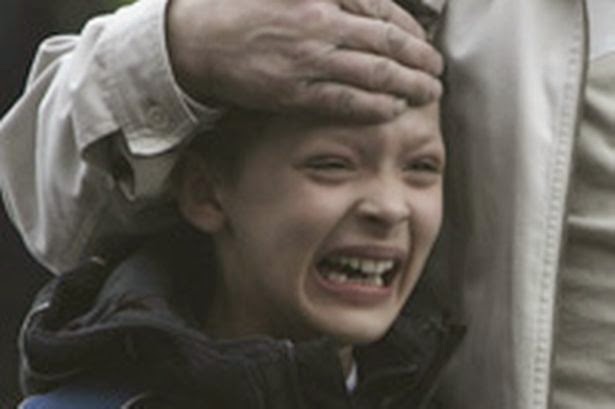
Your child may have been removed from you by the Ministry of Children and Family Development (MCFD) in British Columbia. You may sincerely believe that the removal was unjustified. You may feel that you have valid reasons to contest the actions of the Ministry. You are entitled to your day in court so to speak. It is not unusual for MCFD to seek to establish a Mediation agreement with you that disposes with court proceedings.
It is important that you think carefully before agreeing to this.
You can inform the Ministry of the following:
1. It is my right to have legal representation and advice in all dealings with the director.
2.I do no wish to commit to any sort of hearing until I have a chance to seek counsel.
3. I have been advised that mediation places a gag order on me. This means I will be unable to consult with some of my advisers and places me at great disadvantage.
4.The mediation cannot be arranged without my consent and I have been advised that attendance is not compulsory.
5. I have been advised that once a person enters mediation it can postpone protection hearings and this has sometimes caused very long delays.
6.When the director filed a complaint with me under the CF&CSA he clearly placed himself in an adversarial position and this is again apparent in the presentation report. He has great power over me under the Act and this would make any negotiations in good faith to be difficult.
I am informing you that I will not attend or participate in the mediation program.
In this global community I have a reliable GPS that delivers dependable information and confidence of arrival at my destination. ©Ron Unruh 2009
Showing posts with label Child. Show all posts
Saturday, April 4, 2015
Monday, January 19, 2015
WHETHER TO REMOVE OR TO RETURN
Parents frequently find it so difficult; it is almost impossible to recover custody of their children, once the child is removed. The emphasis of the cases changes from whether the child should have been removed, to should the child be returned. Now the parent must demonstrate entire cooperation with CPS, good behaviour, complete control of emotion and attitude and the tongue, and fitness to be reunited with the child. The need for the CPS agency to demonstrate the need for out-of-home placement evaporates. The burden of proof shifts from CPS to the parents by virtue of who has physical control of the child. It is a procedural spectacle. Once a child is removed it is very difficult for lawyers to get a child returned to parents whether the removal was appropriate or it wasn't. Children who are removed, are likely to remain in government care for a long time, perhaps years.
Thursday, January 15, 2015
IS EMERGENCY REMOVAL OF CHILDREN STANDARD PRACTICE?
![]() |
| reunion party photo |
![]() |
| from www.lukesarmy.com |
In the first case, the initial concern was that the infant had been physically abused, shaken. Was seizure without notification necessary in either of these cases? Has it become standard practice? These children were eventually returned to parents. Yet here is a gripping observation. In both the instances, the children were found not to have been maltreated, neglected, abused. That is merely symptomatic of a system that uses emergency removal as the tool with which to deal with appropriate concerns that must be investigated.
Saturday, January 10, 2015
THE TERROR OF A CHILD REMOVED
Often for various reasons, removals of children occur at night. That is absolutely terrifying to families and particularly to the children. In such cases parents do not have time to prepare their own children for the intervention and for the affects of separation from family. Obviously, I express this concern with a view to children who are not so badly neglected or abused that they feel they are being delivered. The personnel who conduct such removals as well as those who supervise the placement, are usually strangers to the children. A modest number of placements are made with relatives. It should not be minimized how alien such foster surroundings are perceived by children when all that is familiar is removed from them. They often have no idea why this happening to them. They may live in shock and panic and they may cry and isolate themselves unless they are infants and toddlers who respond to a hug and human warmth.
Labels:
Child,
Children,
families,
isolate,
night,
panic,
placements,
removals,
separation,
shock,
strangers,
terror
Thursday, January 8, 2015
THE EXCESS OF EMERGENCY CHILD REMOVAL
It's a bureaucratic spectacle. It is recognizable. Even lawyers acknowledge that within a network of social workers, police officers and judges who make the hard decisions for emergency child-removals, there is a tendency for these professionals to become self-reinforcing and self-perpetuating in all subsequent child protective proceedings. Where are the checks and balances, the accountability, the investigatory due diligence, particularly when it is also statistically evidenced that each day that a child lives in a foster care environment is another day closer to the termination of all parental rights. In a just system, good and responsible parents despite economic, emotional or relational challenges would be identified, would not be cut off from their children and would not lose in their lives, what is most precious to them. There is so much that a just child protection system can do to assist parents to raise their children safely and happily rather than to take the children away.
Tuesday, February 28, 2012
FAMILY AUTONOMY
The family is the primary social institution. Family autonomy you would think should be among the most important objectives of provincial and federal governments. What we have come to understand that parental liberty is fundamental to the concept and function of family. The family is the primary conservator and transmitter of values, beliefs and traditions. Can it not be evident to Members of the Legislative Assembly of B.C. and to the Ministry of Children and Family Development and to Educators and to Law Enforcement that any intervention into family is like an invasion into its sanctity because it endangers family customs and ideals?
Such recognition is underscored by the fact that the autonomy of family is both acknowledged and defended within Canadian human rights documents and international papers of which Canada is a signatory. Such documents seek to protect the rights of families against the intrusions inferred here against what is universally recognized as the natural and essential societal unit. It should be entitled to protection.
Thursday, June 23, 2011
BEST INTERESTS OF THE CHILD / 552
The concept of the ‘best interests of the child’ is a universal theme expressed in a variety of international and Canadian instruments of law and practice. But is it anything more than a theme? Does it actually have content? I am not certain that it does. It is cited with conviction in child protection care proceedings and custody battles but why? Such cases are never decided on the basis of that theme but rather the specific facts of the case. The concept of “best interests” is a part of the rhetoric of child protection agencies.
The deficit is that the modifier “best’ is not defined, in fact perhaps indefinable. Even the touted United National Committee on the Rights of a Child has not taken a position to define the term with precision. Without a definition, “best interests” has no constraints, and then while the trumpeted term sounds politically and morally correct, it can lead to wrong impressions, inaccurate assessments and unjust decisions.
Friday, December 10, 2010
A FAMILY WAITS FOR THE WORD / Part 394 / For Love and For Justice / Zabeth and Paul Bayne
If Judge Crabtree, Bruce McNeill, Finn Jensen or anyone else needs some validation that the best interests of the three Bayne children will be best served by a permanent and unqualified return to their biological parental home where the fitness of the Bayne parents and grandparents to care for the children is unquestioned, then these photos should be seen. Judge Crabtree ordered a six hour family visit each Saturday in the home of the Baynes and these children provide evidence that this is where they belong and where they desire to live. Again, must I qualify this by clarifying that the previous comment is no reflection upon the present foster family. This is not a contest or comparison. I speak to what is just and right and timely. This is a biological family. It's been three years. These children need their parents. Paul and Zabeth prepared their home for the return of the children. Or perhaps better stated, their home has always retained a readiness for the return of the children.
Their daughter has a bedroom of her own and it is suitably girly and made for a princess. She loves her bed and she lays her soft toys in order and they wait for her return the following week. Her habitation there should not be a weekly visit but 24/7. The boys as well have a bedroom and at their request, Paul and Zabeth kept the beds that the boys remember because that is what the boys requested. When these children return home permanently the family will shop for 'big boy' beds.
It doesn't have to be much to make a child happy. Kent is wearing a cowboy tie like his Bumpa wears so he is content.
Music is a large slice of life for Zabeth, although it has been on hold during her ordeal. Perhaps when the children are returned her interest will revive and perhaps one or more of her children may want to learn to play.
Grandpa and Grandma are able to visit their grandchildren on these days. It must mean so much. Grandparents suffer as well when their children and their grandchildren are separated and a family world is in disarray. How agonizing it must be for them to think that Judge Crabtree must decide whether or not the Ministry should keep the children. That ruling may be 5-7 weeks away.
A children's room is filled with appealing opportunities for hours of play.
Mommy loves her little girl and Bethany has done so well. There are so many reasons for thanksgiving. Now we are trusting that the wait will not be long until the Judge permits this family to be reunited and they can be together in their own home without a supervisor or a caseworker second guessing all their actions.
These photos were taken from a Facebook entry and Facebook friends may see all the photos here.
![]() |
| Daddy and Bethany and fluffy toys |
![]() |
| Baden and stuffy toys on his bed |
![]() |
| Boys bedroom |
![]() |
| Kent and a tie like Bumpa's |
![]() |
| Mommy and Bethany at the piano |
Music is a large slice of life for Zabeth, although it has been on hold during her ordeal. Perhaps when the children are returned her interest will revive and perhaps one or more of her children may want to learn to play.
![]() |
| Bumpa and Baden at quiet play |
Grandpa and Grandma are able to visit their grandchildren on these days. It must mean so much. Grandparents suffer as well when their children and their grandchildren are separated and a family world is in disarray. How agonizing it must be for them to think that Judge Crabtree must decide whether or not the Ministry should keep the children. That ruling may be 5-7 weeks away.
![]() |
| Children's Playroom |
A children's room is filled with appealing opportunities for hours of play.
![]() |
| Mommy and Bethany |
These photos were taken from a Facebook entry and Facebook friends may see all the photos here.
Saturday, November 20, 2010
TV REALITY SHOW / Part 373 / For Love and For Justice / Zabeth and Paul Bayne
This would make a great reality TV show. I'm serious. Think about it.
It's a popular format. Numerous celebrities are having a second-wind career from reality shows filmed around the true life scenarios of their own lives, and when it involves whole families, they create appeal to a wider age spectrum of viewers.
The Gene Simmons Family Jewels show is a great example. It features former KISS rocker, Gene Simmons, and his girlfriend, actress Shannon Tweed, whom he proudly never married but has lived with since 1985 and is utterly devoted to her. Also integral to the show are their two children, Nicolas born in 1989, and Sophie in 1992. Occasionally Shannon's sister, Tracy Tweed also appears.
A host of others like the Ozzie Osborne Family Album and Hulk Hogan and his family and action film superstar Stephen Seagal now turned Lawman and Paris Hilton and M.C. Hammer all have tried or are trying their hands at this medium for making cash. And that is precisely my reason for mentioning this possibility in the context of British Columbia's Ministry of Children and specifically the child protection arm. MCFD and the public are constantly carping about the government budget cuts, the consequent staff shortages and large case loads. Critics of child removals and foster parenting are always putting forth arguments that allege monetary agendas. I just think we should meet these issues head on by considering a sure-fire solution for everyone.
I already write reams of posts that suggest that MCFD is a side show so why not capitalize upon this with a proposal to Canada's Global Reality Channel which specializes in such shows. It's a natural. A persuasive producer or two could persuade Mary Polak and Leslie du Toit and the cast of Regional Directors to agree to this enterprise. It holds the possibility of generating millions in revenue for the Ministry. The next BC Premier should be pleased because it reduces the headache of funding this behemoth of child care. Some of the begotten money could be dedicated to parents who have lost almost everything on legal fees. A couple of good writers could pull out true stories from all the regions, subscribe the participation of the principals, the clients, i.e. parents. A world class director could have his videographers and sound people in MCFD offices, family homes, at visitation sites, in the court rooms, wherever good authentic dialogue can be obtained to dramatize the contention between the Ministry of Children and broken-hearted parents and disillusioned children. Court observers and friends could be interviewed for their reactions and opinions. Can't you see it already! A Fantastic journalistic coup, a hit! And imagine being on site when a judge rules against parents, or when social workers high five each other in the hallway after a decision in their favour. The range of emotions make this a winner. Oh, and if good parents got their children back and a great musical score plays in the background – how great would that be! The spin off revenues from sales to the UK, USA, New Zealand and Australia would be astronomical.
The show could be called one of the following, Big Money, High Risk, Flight or Fight, MCFD, Saddest Loser, or House-Broken.
It's a popular format. Numerous celebrities are having a second-wind career from reality shows filmed around the true life scenarios of their own lives, and when it involves whole families, they create appeal to a wider age spectrum of viewers. The Gene Simmons Family Jewels show is a great example. It features former KISS rocker, Gene Simmons, and his girlfriend, actress Shannon Tweed, whom he proudly never married but has lived with since 1985 and is utterly devoted to her. Also integral to the show are their two children, Nicolas born in 1989, and Sophie in 1992. Occasionally Shannon's sister, Tracy Tweed also appears.
A host of others like the Ozzie Osborne Family Album and Hulk Hogan and his family and action film superstar Stephen Seagal now turned Lawman and Paris Hilton and M.C. Hammer all have tried or are trying their hands at this medium for making cash. And that is precisely my reason for mentioning this possibility in the context of British Columbia's Ministry of Children and specifically the child protection arm. MCFD and the public are constantly carping about the government budget cuts, the consequent staff shortages and large case loads. Critics of child removals and foster parenting are always putting forth arguments that allege monetary agendas. I just think we should meet these issues head on by considering a sure-fire solution for everyone.
I already write reams of posts that suggest that MCFD is a side show so why not capitalize upon this with a proposal to Canada's Global Reality Channel which specializes in such shows. It's a natural. A persuasive producer or two could persuade Mary Polak and Leslie du Toit and the cast of Regional Directors to agree to this enterprise. It holds the possibility of generating millions in revenue for the Ministry. The next BC Premier should be pleased because it reduces the headache of funding this behemoth of child care. Some of the begotten money could be dedicated to parents who have lost almost everything on legal fees. A couple of good writers could pull out true stories from all the regions, subscribe the participation of the principals, the clients, i.e. parents. A world class director could have his videographers and sound people in MCFD offices, family homes, at visitation sites, in the court rooms, wherever good authentic dialogue can be obtained to dramatize the contention between the Ministry of Children and broken-hearted parents and disillusioned children. Court observers and friends could be interviewed for their reactions and opinions. Can't you see it already! A Fantastic journalistic coup, a hit! And imagine being on site when a judge rules against parents, or when social workers high five each other in the hallway after a decision in their favour. The range of emotions make this a winner. Oh, and if good parents got their children back and a great musical score plays in the background – how great would that be! The spin off revenues from sales to the UK, USA, New Zealand and Australia would be astronomical. The show could be called one of the following, Big Money, High Risk, Flight or Fight, MCFD, Saddest Loser, or House-Broken.
Wednesday, November 10, 2010
COMPARATIVES BETWEEN RCMP & MCFD / Part 363 / For Love and For Justice / Zabeth and Paul Bayne
Let's Compare the investigative practices of MCFD and RCMP
None of this affords me pleasure. I have all of my life held our
governments and their agencies and law enforcement in high esteem. I have had
little reason to question their integrity and uprightness. This past year
because of my introduction to the injustice suffered by one family I have been
exposed to the scores of other stories close to home and I have grown apprehensive
and dismayed. My research suggests that child protection has lost its way in
every province and if that was not startling enough in every civilized society.
What is equably written here in this blog is blasted out with vehement rhetoric
in newspapers, magazines, online websites and blogs all over the world. I have
developed a unpleasant case of cynicism over these months. I am unsure whether it
is a treatable condition. For the short term, I know I will have relief when
the Baynes get their children back. But what about the thousands of other
children who must stay in care away from the parents with whom they desire to
live and who love them.
![]() |
| RCMP Coat of Arms |
Similarities between MCFD operations and the deficiencies in RCMP investigations
A pattern of deficiencies in RCMP investigative processes have been uncovered in recent well publicized cases and we recognize some parallels in the way MCFD is processing child protection cases. These are deficiencies have been mentioned:
a. A preset mentality that someone is guilty - MCFD is similarly inclined to form an attitude that the parent(s) is guilty of some kind of abuse or neglect and so does all in their power to produce evidence however insubstantial.
b. Ignoring available evidence or actual evidence that contradicts the preset - Similarly MCFD predictably filters acquired evidence in order to promote that evidence which supports its view of the situation and it has failed to interview available and potential witnesses who would not support the preset mindset.
c. Pressing forward with the prosecution process by laying charges anyway – Similarly MCFD in the Family Court will continue their prosecution or persecution of parents involved to deny them justice and convince the Court of the charges they have against the family. I have witnessed this myself.
Factors in MCFD investigations of families:
a) MCFD says that it takes a forensic approach. This is acceptable provided that a balanced and thorough investigation is conducted in response to allegations, but often allegations have little substance.
b) Typically MCFD looks only for that which is wrong or deficient in a family scenario and places the parenting in the worst possible light ignoring all their admirable points.
c) Often investigators accept the views of those who support allegations while ignoring the advocacy of those who support the family.
d) Interviewing children who are considered at risk often is inferior, while parents may not be interviewed at all prior to the removal of children.
e) Many notifications of concern about children and false allegations against parents are found by MCFD investigation to require no further action.
f) Nevertheless, many investigations are pursued with a purpose to find something significantly wrong in order to justify the previous over-reactive removal of a child or to justify a subsequent removal.
g) The agenda may involve a vindictive attitude against a parent or social engineering bent designed to put the children with more suitable caregivers, (as with the removal of aboriginal children in BC and other provinces).
Saturday, November 6, 2010
WHAT WILL THESE CHILDREN BECOME? / Part 359 / For Love and For Justice / Zabeth and Paul Bayne
![]() |
| Sample children, ready to achieve their dreams - carefree & happy |
These three children, the three about whom I have been writing for over one year, the three children who were born to Paul and Zabeth Bayne will be engaged in the future of our country. In some way they will find a place. They will be educated. They will love and be loved. They will choose careers. They will perhaps make a significant and positive mark on a community in this country.
Their formative years are far from exhausted quite yet. The truth is that three of those years have been squandered in unnecessary disorder, bewildering confusion as a matter of fact. Even the two boys, the eldest of the three siblings hardly know what normalcy is. Or at least the definition for normality has been written by a government agency that flipped them around for a while into different foster homes. The little boys into whose lives their sister had come only briefly when they were almost too small to understand, and then she left (was taken) when she was only weeks old, didn't see her again until this past year when she joined them in one foster home. There is still time for their lives to be shaped well, influenced effectively, nurtured lovingly.
How can immature minds cope with this invasion of life and of memory development? How do they process living in one place most of the week and visiting mommy and daddy twice per week? Do they differentiate the affections they must surely have for both foster care givers and mommy and daddy? As they go to school, do they experience thoughts and feelings of being different from other children?
A boy who was three years old, is now six. A girl who was weeks old, is now three years of age. And all the while Paul and Zabeth have grown ever more stoic. I watched the emotion pour from them in year one and year two. They wept. They still do cry but what you see most of the time is a determination not to be crippled emotionally by a government agency that has completely lost its way in this case. Sure this is merely one region of the Ministry of Children but similar cases are occurring elsewhere.
These young lives will be shaped well, influenced effectively and nurtured lovingly in their own parental home with their mommy and daddy. That is the way it must be. A prudent MCFD regional staff would see that and advocate that. It would relinquish this commitment to an irresponsible risk assessment, would acknowledge the quality character of these two parents, would surrender the control of these children's lives to these parents and let them get on with the business of living and growing up and being happy. This is not too much to ask. It is simply too much to expect from this outfit that has pressed this matter all the way to a court decision three years after the presenting incident.
What will these children become?
Friday, November 5, 2010
Foster Parent and a Foster Child / Part 358 / For Love and For Justice / Zabeth and Paul Bayne
The next quotation of a child's comment comes from Tuesday's post, called 'Listen to the Children.' “Can we stay now?” A small child's earnest request to remain with birth parents from whom he has been separated for half his life is without any agenda other than personal satisfaction of the heart.
It is not a child's comment on the care received within the foster home. It is not a child's comment about foster parents. It is not a child's statement that affirms or denies appreciation for what a foster parent has done for the child. It is simply a child's stated desire.
Foster parents motivated to care for children who are temporarily in need of a place to stay and in which to have their daily needs met, and to provide some sense of stability and affection are to be commended. I have said this before. Never having offered this service myself, I am unsure how you foster folk maintain the necessary objectivity to remain emotionally unattached to the child. Of course it helps if you already have children of your own. You do not require or want the additional permanent responsibility of someone else's child or children. This is a temporary service you do. Most foster parents understand perfectly, their roles and functions. They are foster, surrogate and alternate and are interim, impermanent and want it that way. Yet, can a foster parent become attached emotionally to an infant or a small child in one's care? I can believe that this happens.
The foster parents of the Bayne children did not initiate this question or this blog post, nor did the birth parents. This is entirely detached from them. The ideas arose elsewhere in a rather general discussion rather than case specific. Could a foster parent become jealous of the affection of a child shown to the biological parents – an affection demonstrated by a simple statement such as, “Can we stay now?” Would that be an awkward and somewhat troublesome tug of war. Would that influence a foster parent's care program? Would it affect how a foster parent treated the child, spoke to the child? Would a foster parent attempt to win the child's affection somehow? Could a foster parent regard birth parents as rivals? How does a foster parent show care with affection and then successfully shut that down because their task is completed? I said in an earlier post that there are 16,000 children annually in BC who live for some time outside their parents' homes. The issues must therefore be handled many times by foster parents in this province.
I have to say, I never thought of these things, certainly not when I wrote the piece entitled “Listen to the Children.” It was merely a means to convey that a child has something to say about the way he wants his life to unfold. He should be heard.
Friday, October 29, 2010
SAFE AND RISK FREE / Part 351 / For Love and For Justice / Zabeth and Paul Bayne
The transcripts have been delivered to the Baynes.
Within days their legal counsel will present a compelling refutation to Judge Thomas Crabtree. Upon reviewing all court reports including this last document, Justice Crabtree will deliver a ruling that will determine the future of a family. It will be a just ruling when he clearly discerns the truth. We are trusting that Mr. Crabtree will not be influenced by the name, education, position or reputation of the information source but rather, be passionate to distinguish truth regardless of who stated it. I have sometime commented on actions outside and inside court because that is all we can see. We cannot know motives despite the certainty with which some of my readers speculate.
Through this long ordeal Paul and Zabeth have exhibited tranquillity despite the accusations directed at them. That spontaneous deportment of peace and contentment is unsurprising from people whose consciences are pure. They will not be better people if Judge Crabtree awards them their own children. Nor are they unworthy parents because Finn Jensen told the Judge that they are. They are who they are. And for them, it matters that God sees them. Understandably their attention is on their own family and the outcome of Judge Crabtree's deliberations, but I can tell you this. When peace controls their futures, Paul and Zabeth are the kind of people who will speak peace to other sufferers.
Only love can lighten heavy burdens like this and Paul and Zabeth not only have love for each other but have an abundance of it from an army of people. All of that love helps to carry the heavy burden. They are fortunate that is true.
I assure you that both Paul and Zabeth have improved their lives during the past three years – not financially of course. Yet they have stared fear in the face and have battled for family and in that brave effort have attained skills and virtues they never considered before. Perhaps some of the greatest victories have already been won. When these children get their parents back, this will be one great family. Three children will have diligent and sincere parents like few others because they have already made progress in these important areas. These parents have lived peaceably while facing people who do not like them and have not cared for them and their three children will be entirely safe and risk free in their biological family home.
Only love can lighten heavy burdens like this and Paul and Zabeth not only have love for each other but have an abundance of it from an army of people. All of that love helps to carry the heavy burden. They are fortunate that is true.
Tuesday, October 12, 2010
TERMS OF JUSTICE / Part 335 / For Love and For Justice / Zabeth and Paul Bayne
Given our Canadian Rights and Freedoms, a miscarriage of justice within our Canadian legal and social context is essentially the conviction and punishment of a person for a crime that he/she did not commit. Synonymous with miscarriage of justice is the term 'wrongful conviction' which refers to conviction reached in an unfair and disputed trial. Occasionally the biased term 'travesty of justice' is applied to an offensive and deliberate miscarriage of justice
There are avenues by which to quash or overturn a wrongful conviction but these are difficult to navigate and achieve. We all agree that the most grievous cases are wrongful convictions that are not overturned for many years or before the convicted but innocent person dies by execution or natural death while incarcerated. But here we are discussing not a criminal but a civil matter, a child protection issue, where the suspicion card is played as strategically and effectively as the evidence card. The suspicion card is an incredible card because it permits the player to proceed directly to the goal without passing GO and yet collects thousands of dollars en route. That's what has happened to date. Now however, the court case required the player to present the suspicion so convincingly that suspicion should be regarded as equivalent to evidence. Circumstantial is to be regarded as actual. What a leap! What an hypothesis! What fertile ground for ---------MISCARRIAGE OF JUSTICE.
In the case of the Baynes what we have is not a conviction at all because there have been no legal criminal charges brought against the Baynes. So, no, they have not been wrongfully convicted. Yet a penalty has been imposed already, not only upon a mom and dad who are suspected by the Ministry of Children of harming their youngest child, but also upon the three children whom we all would concur are truly innocent. October 22nd is quickly approaching, the date that marks the removal of the children in 2007. This family has been enduring this penalty, surviving somehow, for the past almost three years.
How Mss. Polak and Dutoit cannot be concerned, or troubled, perhaps appalled, intelligibly sickened by the injustice of this aspect of their Ministry operations I fail to understand. At least be attentive to it. Forget that this case has been before the court since January. There was ample time before the actual court date for a top level intervention, some kind of compassionate involvement to second-guess and inquire into the case handling by the Fraser Valley Region of the Provincial MCFD mandate.
Let's suppose that the Judge's ruling does not move in favour of the Baynes. The children remain in provincial foster care. Let's suppose it proceeds beyond that to the adoption of the children.
Years in care can have a substantial, irreversible effect on the maturing child becoming an adolescent and an adult. In a case such as the Baynes, a CCO (Continuing Care Order) with its potential for adopting the child to new adoptive parents, the child will never have cause to believe that one or more parent did not abuse her when she was an infant. Their reputations will never have been officially untarnished. She may want nothing to do with her birth parents when she is of age to find them. Her sibling brothers may or may not be adopted with her. The sibling relationship will be effectively severed. And the boys if they remain together may always wonder why the parents with whom they could not live for three years but who visited them faithfully during those three years dropped out of sight and didn't visit any longer. And Paul and Zabeth, fifteen and twenty years from now will be moving out of middle age with hearts wounded irreparably and with lives scarred deeply because the children who were their life, have never been a part of it.
Judge Crabtree must decide against the Continuing Care Order, forget the Last Chance Order/Temporary Care Order, or any other option that credits the MCFD with any credibility whatsoever. Allow the children to return to their parents. It is the right thing to do. It is IN THE BEST INTERESTS OF THE CHILDREN!
Sunday, February 21, 2010
For Love and For Justice / Part 117 / Zabeth and Paul Bayne
Some Realities in Child Protection from which Reform must Emerge Yet Again.
In British Columbia, the Child, Family and Community Service Act (CFCSA, 1996) direct child welfare policy and that document specifies both an ideological and legal framework that proposes least intrusive methods. By that I mean that child protection interventions are only set in motion when a child’s safety falls below minimum community security standards. The identification and alleviation of risk factors that are present in a child’s surroundings is the controlling principle for intervention.

Child protection in our culture receives its mandate from legislation. Our B.C. communities fundamentally support this mandate. Citizens report their suspicions of child maltreatment. Both the legal mandate and public participation validates this child protective function. Even though child protection is considered an essential public service, many people take issue with ways by which child protection is administered. In fact, as with other essential services, such as the police, the public routinely condemns the service for perceived failures and shortcomings. The response of government has been episodic attempts at child protection reform, typified by inquiries, escalated research, reorganizing administration and altering the service delivery model, changing the staff training, or hiring additional staff, or staff with different competencies or slashing the budget and then recuperating the budget.
Child protection as it is presently configured, acquires its cases primarily through reactive processes. For example, citizens, such as neighbours, friends, acquaintances, family members or other observers of the family can and do report protection concerns. Volunteers and employees in youth-services, in schools, churches, childcare, nurses and doctors are all legally and ethically required to report their suspicions of maltreatment. Police when summoned to an urgency where children might be at risk, will file protection concerns. This is the reactive basis of child protection. The reality is that child mistreatment cannot be entirely prevented. Since no single intervention has been found to be effective in preventing or curing child maltreatment, responding to or attempting to prevent further maltreatment are the options left to responders who are charged with this.
Of course in making those observations I haven’t begun to touch upon the manner by which child protection workers affect their tasks as first responders and ongoing workers with the children, with the parents, with the people under suspicion of maltreating a child.
(A well written Master's thesis by Nathan Patton entitled 'Child Protection as a Culture of Negotiation' in 2009 infomred my thinking about the reality of the current status of child protection.)
In British Columbia, the Child, Family and Community Service Act (CFCSA, 1996) direct child welfare policy and that document specifies both an ideological and legal framework that proposes least intrusive methods. By that I mean that child protection interventions are only set in motion when a child’s safety falls below minimum community security standards. The identification and alleviation of risk factors that are present in a child’s surroundings is the controlling principle for intervention.

Child protection in our culture receives its mandate from legislation. Our B.C. communities fundamentally support this mandate. Citizens report their suspicions of child maltreatment. Both the legal mandate and public participation validates this child protective function. Even though child protection is considered an essential public service, many people take issue with ways by which child protection is administered. In fact, as with other essential services, such as the police, the public routinely condemns the service for perceived failures and shortcomings. The response of government has been episodic attempts at child protection reform, typified by inquiries, escalated research, reorganizing administration and altering the service delivery model, changing the staff training, or hiring additional staff, or staff with different competencies or slashing the budget and then recuperating the budget.
Child protection as it is presently configured, acquires its cases primarily through reactive processes. For example, citizens, such as neighbours, friends, acquaintances, family members or other observers of the family can and do report protection concerns. Volunteers and employees in youth-services, in schools, churches, childcare, nurses and doctors are all legally and ethically required to report their suspicions of maltreatment. Police when summoned to an urgency where children might be at risk, will file protection concerns. This is the reactive basis of child protection. The reality is that child mistreatment cannot be entirely prevented. Since no single intervention has been found to be effective in preventing or curing child maltreatment, responding to or attempting to prevent further maltreatment are the options left to responders who are charged with this.
Of course in making those observations I haven’t begun to touch upon the manner by which child protection workers affect their tasks as first responders and ongoing workers with the children, with the parents, with the people under suspicion of maltreating a child.
(A well written Master's thesis by Nathan Patton entitled 'Child Protection as a Culture of Negotiation' in 2009 infomred my thinking about the reality of the current status of child protection.)
Subscribe to:
Posts (Atom)